
CUISINE · PACKAGE TECHNIQUE
Bánh tét mật cật: the leaf that shapes the cake
The narrow mật cật palm leaves and strong veins demand skilful folding, filling and tying to form this triangular bánh tét.
Bánh tét is found across southern Vietnam, but Phu Quoc's mật cật version has a distinctive triangular cross-section. Neatly folded palm leaves surround green-tinted glutinous rice, mung bean and rich pork.
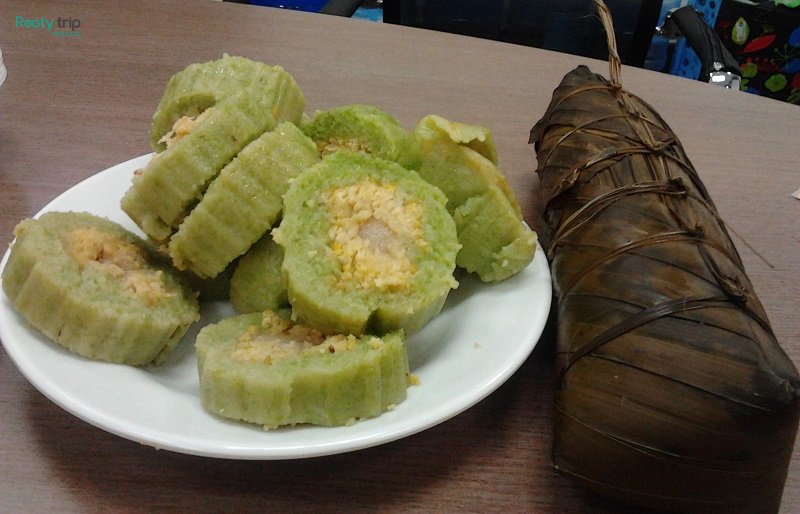
The narrow-leaf ship makes the shape of the cake
Mật cật palm leaves are narrower than banana leaves and have strong central veins. They are softened in hot water, cleaned and layered around the rice and filling. Aligning several narrow leaves and pressing them into a neat triangular form takes careful, practised hands.
Tie it tightly to make a delicious cake
Strips from the tough leaf veins can also be used as ties. If the wrapping is too loose, water enters during boiling; if it is too tight, the rice cannot expand and cook evenly. Local stories offer several explanations for the use of mật cật leaves, but the available historical record does not establish one definitive origin.
Eat a ring, clearly see the glutinous layer and filling
The classic bánh tét mật cật recipe usually uses delicious glutinous rice, beaten green beans, and creamy pork belly; the outer layer of the glutinous coat is usually dyed green with fragrant pandan or peony leaf juice. However, depending on the secret of each bakery, they can flexibly change the filling, cake size, and dosage of ingredients to adjust the fat. If you're buying honey cake as a gift or need to find a vegetarian filling, be sure to ask the seller carefully about the filling of the exact batch you're buying, as well as the time and storage method so that the cake doesn't spoil during travel.